Whitening is the cosmetic treatment people most often assume is simple, and it is also the one where UK law is most specific. This page explains how it works, what it cannot change, who may provide it in the UK, and why the order of treatment matters if you are also having work such as crowns, veneers or bonding. It sits alongside the other options in our guide to cosmetic dental treatments.
It describes UK rules. We have not found a verified source on how whitening is regulated in Turkey, so we do not describe it. The UK rules still make a useful benchmark: they are a clear statement of what a careful assessment looks like.
How does teeth whitening work?
Professional whitening uses a bleaching product that contains or releases hydrogen peroxide, applied either at home in trays made for your mouth or in the surgery. The NHS says a kit from a dentist usually takes 2 to 6 weeks of home use, while a laser treatment in the surgery takes 1 to 2 hours.1
The NHS also says that the effect may last for around 3 years and that a dentist should check your teeth and gums first.1
How well does it work? A Cochrane review of 71 trials of home-based bleaching found that bleaching agents whitened teeth compared with a placebo over periods from two weeks to six months, but rated the certainty of the evidence as low to very low.5 In plain terms, the trials point in the expected direction, but they are not strong enough to tell you how much lighter your teeth will get, or for how long.
What can whitening change, and what can it not?
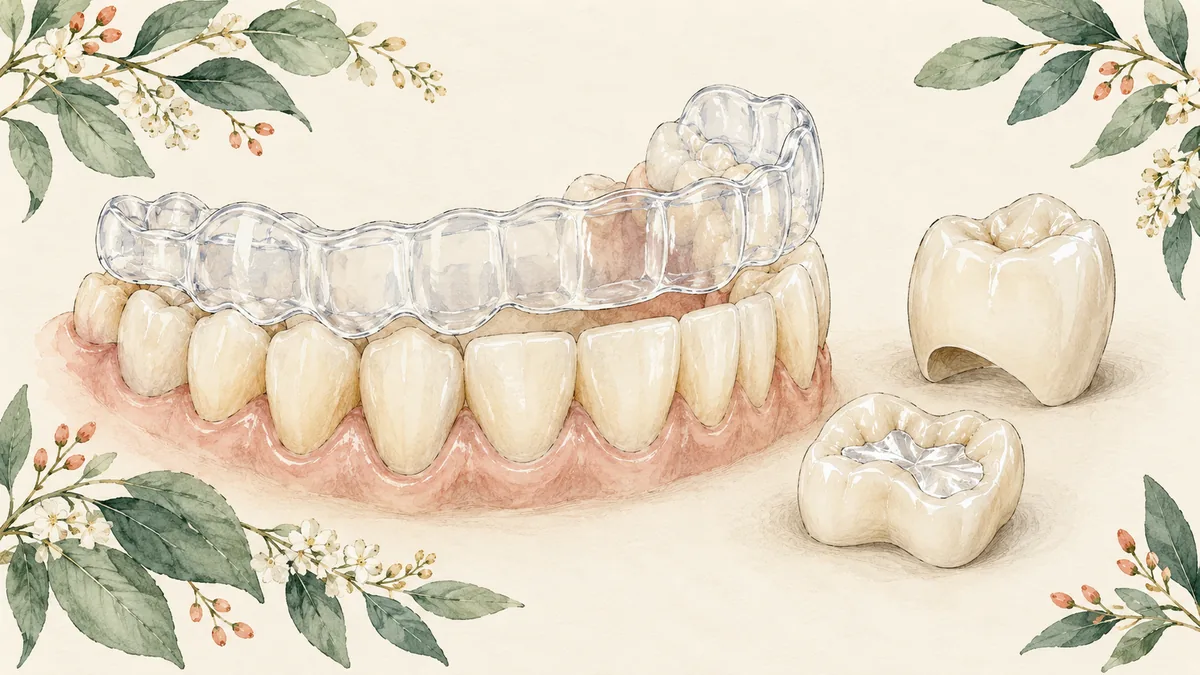
Whitening acts on natural tooth colour. The NHS states that it can only lighten the colour of natural teeth, and that it is not recommended if you have crowns, dentures or implants.1 Veneers and composite bonding are also not natural tooth, so the same logic applies.
That is our inference rather than the NHS’s wording, so ask your dentist to confirm it for your own mouth. This is the planning point many people miss. If a front tooth has a crown or bonding and the teeth beside it are whitened, the colours can drift apart, because the restoration does not lighten. Our bonding guide explains how the colour of bonding is matched to the tooth when it is placed, which is why timing matters.
What are the UK rules? Whitening is a dental procedure
In the UK, tooth whitening is not a beauty treatment. The GDC states that whitening should only follow a proper assessment by a registered dentist, on their prescription.2 The regulator also says that anyone who is not on its register and offers whitening is breaking the law, and that this applies to beauticians.2
The GDC’s page adds that whitening can be carried out by the dentist, or by a registered hygienist, dental therapist or clinical dental technician working on that prescription.2 If you are unsure who is treating you, our guide to verifying a dentist explains how to check.
The legal basis is set out in the GDC’s page on the law, which says a 2013 High Court case confirmed that whitening is the practice of dentistry, regardless of the products used.3 The same page gives 6% as the maximum hydrogen peroxide strength a dentist can use for cosmetic whitening.3 It also says that products of up to 0.1% can be sold, but that this does not make whitening by an unregistered person legal.3
What do the hydrogen peroxide limits say?
The current limits are in entry 12 of Annex III to the cosmetics regulation, as it applies in Great Britain. The table summarises what the entry sets out. Older web pages that cite 2012 regulations are out of date: the GDC’s 2016 position statement confirms that those rules were revoked and replaced in 2013.6
| Hydrogen peroxide strength | Who may supply it | Conditions |
|---|---|---|
| Up to 0.1% | May be sold to the public as an oral product (legislation.gov.uk4) | The cap for oral products sold to the public |
| More than 0.1% and up to 6% | Sold only to dental practitioners (legislation.gov.uk4) | First use of each cycle by a dental practitioner or under their direct supervision; not for under-18s |
| More than 6% | Not permitted for cosmetic whitening (GDC statement6) | Supplying or administering it is illegal and enforced by Trading Standards |
The legislation text we used is the Great Britain version. If anything in your situation depends on where in the UK you live, ask your dentist or the GDC. UK law governs what can be done in the UK; it does not tell you how whitening abroad is regulated, and a clinic abroad is not bound by it.
Does the order matter if you also need restorative work?
Yes, and the reason follows from what whitening can and cannot change. Because crowns, veneers and bonding keep the shade they were made in, whitening is normally planned first, with restorations matched to the lightened natural teeth afterwards, which is why a smile makeover plan should settle the order first.
That is a planning logic rather than a rule from the sources, so ask your dentist how they would sequence it. For the choice between the two main kinds of covering, see crowns versus veneers.
Two details are worth raising. First, the NHS says the effect of whitening may last around three years,1 so natural teeth can drift back darker while a restoration stays as made, and it is worth choosing a shade you can live with over time. Second, ask how long after whitening the shade for a restoration will be chosen.
What about sensitivity?
The NHS lists sensitivity to cold and sweet foods, sore gums or throat, and white patches on the gums as side effects of whitening.1 The Cochrane review found tooth sensitivity and oral irritation were the most common side effects, more frequent with higher concentrations of the active agent, though mild and transient.5
That is consistent with the cap on strength. Sensitivity that does not settle, or gums that are sore or blistered, is a reason to stop using the product and contact your own dentist, or NHS 111 if you cannot reach one. Call 999 or go to A&E if it is hard to breathe, speak, swallow or open your mouth, or if there is a lot of swelling in your mouth, face or neck. Do not use stronger products to compensate.
What about over-the-counter and salon products?
The NHS says whitening done elsewhere, such as in beauty salons, or with a kit bought from a pharmacy or online, does not work as well and may harm your teeth and gums, and that a kit from a dentist, or treatment at a dental surgery, is the safest way.1
The GDC’s position statement says products with between 0.1% and 6% hydrogen peroxide can only be sold to dental practitioners.6 A kit sold directly to the public that claims higher strength would not fit the rules above, which is a good reason to be cautious about it. The same applies to a whitening offer attached to a larger cosmetic package: it should be assessed and supplied by a registered dental professional, with the same checks.
Frequently asked questions
-
Is teeth whitening legal in beauty salons?
No, not in the UK. Whitening is classed as the practice of dentistry, so only a registered dentist, or a hygienist, therapist or clinical dental technician working on a dentist’s prescription, may provide it. Anyone else offering it is breaking the law, according to the General Dental Council.
-
Can crowns or veneers be whitened?
No. Whitening can only lighten natural teeth, and the NHS does not recommend it where you have crowns, dentures or implants. Veneers and bonding are not natural tooth either, so the same applies. If you want a lighter smile and restorations, plan the order with your dentist. See composite bonding for colour matching.
-
How long does teeth whitening last?
The NHS says the effect may last around three years, but it varies from person to person. The Cochrane trials we reviewed followed people for two weeks to six months, so they cannot tell you the long-term result. Crowns, veneers and bonding keep the shade they were made in, so plan the order with your dentist.
-
Is whitening available on the NHS?
No. The NHS says teeth whitening is not available on the NHS, so it is a private treatment. If a tooth is damaged, decayed or painful, ask your own dentist what the NHS can provide for that problem, which is a separate question from the colour of your teeth.
-
Does whitening damage teeth?
The NHS says whitening provided by a dentist is the safest route, and that treatment elsewhere may harm your teeth and gums. Side effects such as sensitivity are common but mild and temporary in the trials we found. A dentist should check your teeth and gums before starting, and anything that does not settle should be reported.
-
Do UK whitening rules apply if I have it done abroad?
UK law governs what can be done in the UK, so it does not protect you abroad. We found no verified source on whitening rules in Turkey. The UK standard is still a fair benchmark: an assessment first, a limited strength, and a registered professional. Agree the order with any crown or veneer work in writing.