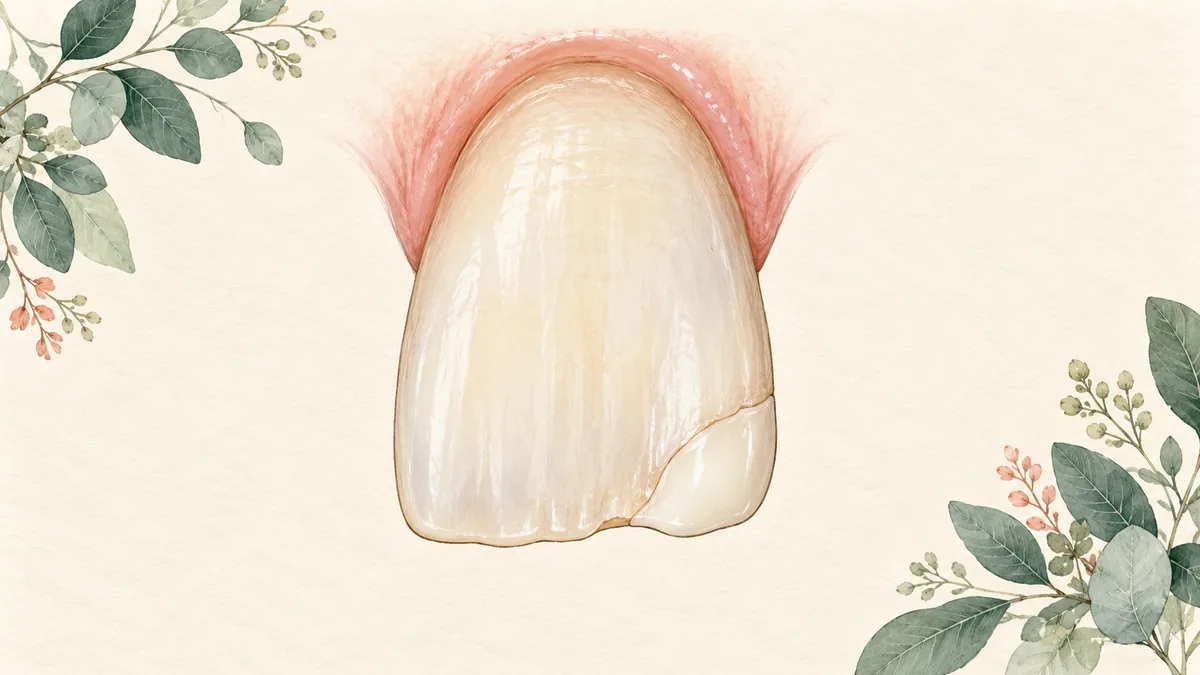
Composite bonding is the least invasive way of changing how a tooth looks, which is why it sits at the start of the treatment ladder on this site. If you are researching composite bonding in Turkey, the points that matter are what it can and cannot do, how long it lasts, and what is different about having it done on a trip.
It is not a perfect treatment, and it is not a rival to every crown. This page sets out the evidence plainly, including where it is thin, and our guide to cosmetic treatments covers the other options.
What is composite bonding and how is it done?
Composite bonding builds up a tooth with tooth-coloured resin, which is shaped by the dentist and hardened with a light so that it sticks to the tooth. It is used to close gaps, repair chips, change the shape or length of a tooth and mask discolouration.
When it covers the whole front of a tooth, it is often called a direct composite veneer. Because the resin is placed and shaped in the mouth, there is no laboratory stage. A 2025 narrative review lists immediate results and little tooth preparation among the benefits, and staining, decreased durability and upkeep among the drawbacks, so it advises careful patient selection.1
Whether you need a local anaesthetic depends on how much, if anything, is done to the tooth surface first. We found no verified rule on this, so ask your dentist beforehand.
Why does “additive and reversible” matter?
With a crown or a veneer, healthy tooth is cut away and does not come back. Bonding works the other way round: material is added, and the tooth underneath is largely kept. If the resin stains, chips or fails, it can be repaired or replaced without having lost the tooth that sits beneath it.
That is the heart of the argument for bonding, and an evidence-based review says direct composite veneers are usually less invasive of the tooth and easier to repair, whereas preparation for indirect veneers is generally more invasive and harder to repair.2
Reversible does not mean leaving no trace. If the tooth surface is lightly prepared, or old resin is later removed, a small amount of enamel can be affected, and we found no reliable figure for how much. Our page on tooth preparation explains why the amount taken matters so much.
Treatment comparison
Bonding keeps more options open
What can bonding fix, and what can it not?
Bonding is best suited to small, well-defined changes to sound teeth, such as small gaps and chipped or uneven edges. Larger or more complex problems usually need a different approach, and broken, heavily filled or root-filled teeth may need a crown. The table sets out the general picture, and a dentist must assess your own teeth.
| Concern | Is bonding likely to help? | Notes |
|---|---|---|
| Small gaps between front teeth | Often | Resin is added to the sides of the teeth |
| Chipped or uneven edges | Often | Repairable if it chips again |
| Stained or discoloured teeth | Sometimes | Resin can itself discolour over time |
| Worn teeth | Often considered first | May have a limited lifetime if grinding or erosion continues |
| Crowded or crooked teeth | Limited | Needs assessment of the bite and alignment first |
| Broken, heavily filled or root-filled teeth | Usually not enough | May need a crown: see crowns versus veneers |
Not every worn tooth needs treatment at all. Guidance on tooth wear from the Radboud group prefers minimally invasive adhesive restorations when treatment of severe wear is needed, and says that if a patient has no complaints, counselling and monitoring is probably the best option.6 Colour is a related planning point: if you want whiter teeth as well, discuss the order of work with your dentist, and see our whitening guide.
How long does bonding last, and what about staining and repair?
The honest answer is that nobody can give a single dependable figure. We found no defensible “bonding lasts X years” number, because the studies mix different kinds of restoration and report very wide ranges. The table shows what the main reviews found.
| Study | What was followed | Result | Caveat |
|---|---|---|---|
| Systematic review, 7 studies3 | Resin composite laminate veneers, at least 2 years | 88% survival in the randomised trials, at an average of 2 to 8 years | Small evidence base |
| Systematic review, 17 studies4 | 1,821 anterior restorations, including veneers and worn teeth | Annual failure 0% to 4.1%; total failure 24.1% | Mixes several restoration types |
| Critical appraisal, 24 studies5 | Direct anterior composite restorations | Large variation in performance | No pooled figure given |
Among resin composite veneers, the direct ones had higher survival than those made in a laboratory, and most complications, mainly surface roughness, colour mismatch and edge staining, were judged clinically acceptable with or without repair.3 In the wider review, fracture was the commonest reason for failure, and for restorations placed for appearance, failures were more often about colour, form and staining.4
The practical lesson is that bonding is a treatment you maintain. It needs polishing and occasional repair, and some people will want it redone. The advantage is that this can usually be done without more tooth loss. Ask your dentist what upkeep to expect and whether repairs are included in what you are quoted.
Composite bonding in Turkey: what differs?
We found no verified outcome data for bonding done in Turkey or anywhere abroad, so we cannot say results differ. What does differ is the circumstances in which the work is done and followed up: who places the bonding, how easily it can be reviewed and repaired after a short trip, and whether your quote considered bonding at all.
- The operator matters. A critical appraisal found large variation in performance and linked it to the treatment environment and the number of operators,5 so ask who will place your bonding and whether the same dentist finishes it.
- Follow-up is harder. Resin that stains or chips is easiest to fix soon after it happens, and a short trip leaves little chance to review it. Ask who would repair it and on what terms.
- The quote may not mention it. A package built around crowns may never raise bonding. Ask whether it was considered for each tooth, and why not if it was not.
Our veneers guide and the questions in the section on tooth preparation apply here too.
Bonding instead of crowns: when is it the better decision?
Bonding is the better first step when the teeth are sound and the problem is small, because it keeps the option of a crown or veneer for later. Choosing a crown first closes that door for good. It is not the better choice where a tooth is broken, heavily filled or has had root canal treatment.
It is also not the better choice where the problem is crowding rather than shape, or where heavy grinding would wear the resin quickly. For severe tooth wear, a Dutch guide prefers minimally invasive adhesive approaches, but warns restorations may have a limited lifetime where grinding or erosion is the cause.6 We cover the decision itself, case by case, in bonding instead of crowns.
What does composite bonding cost?
We do not quote prices on this page. The evidence-based review of anterior veneers notes that direct composite veneers are usually more affordable than indirect ones,2 but a restoration that needs repeated repair is not necessarily cheaper over ten years.
Advertised starting prices for bonding in Turkey and the UK, from our own survey of clinic and practice websites (accessed October 2026), are in our cost section, including what private dental treatment costs in the UK.
Frequently asked questions
-
Does composite bonding damage your teeth?
Bonding needs little or no tooth preparation, so it is described as less invasive than veneers or crowns. It is not entirely without effect, because some designs lightly prepare the surface, and it can stain or chip. Ask what, if anything, will be taken from each tooth. See our page on tooth preparation for the permanent alternative.
-
How long does composite bonding last?
There is no single dependable figure. In randomised trials of composite veneers, about 88% were still in service at an average follow-up of two to eight years, and a wider review of front-tooth composites found annual failure between 0% and 4.1%. Results depend heavily on the case and the dentist. Our veneers guide gives the equivalent figures for ceramic.
-
Is composite bonding permanent?
No. Resin can stain, chip or wear and will usually need polishing, repair or replacement over time. The advantage is that it can be repaired, and that the tooth underneath has been kept. If you want the permanent route compared in full, read our page on crowns versus veneers.
-
Is bonding better than veneers?
It has different trade-offs rather than being better. Direct composite is usually less invasive and easier to repair, but it is more prone to staining and may not last as long as ceramic. Which suits you depends on your teeth and your priorities. Our veneers guide explains the ceramic side of the comparison.
-
Is composite bonding cheaper in Turkey?
Our cost section compares the advertised starting prices for bonding in Turkey and the UK, from our own survey of clinic and practice websites accessed October 2026; we quote no prices on this page. An advertised price is not a quote, so compare itemised quotes for the same teeth, allowing for the repairs bonding usually needs.