When people compare a Turkey package with a UK price, they compare what is on the invoice. The cost that can overturn the comparison is the one that is not: what it takes to put things right if the work fails or needs redoing. This page sets out what we can and cannot say about that price.
We cannot give you a figure for repair, because we found no official or academic source that states one. What we do have is a survey of UK dentists, the NHS charges for repair-type care in England, and one cost that is measured in tooth rather than pounds. If something has gone wrong and you want to know what to do now, read our page on when “Turkey teeth” go wrong first.
When to get help
- Your own dentist: pain, a loose or lost crown or a sore tooth that does not settle.
- NHS 111: urgent dental advice if you cannot reach a dentist.
- 999 or A&E: difficulty breathing, speaking, swallowing or opening your mouth; a lot of swelling in the mouth, face or neck; or a swollen or painful eye or sudden problems with your eyesight.
Who to call and what the NHS covers is set out on NHS care and emergencies at home.
Why can putting dental work right cost so much?
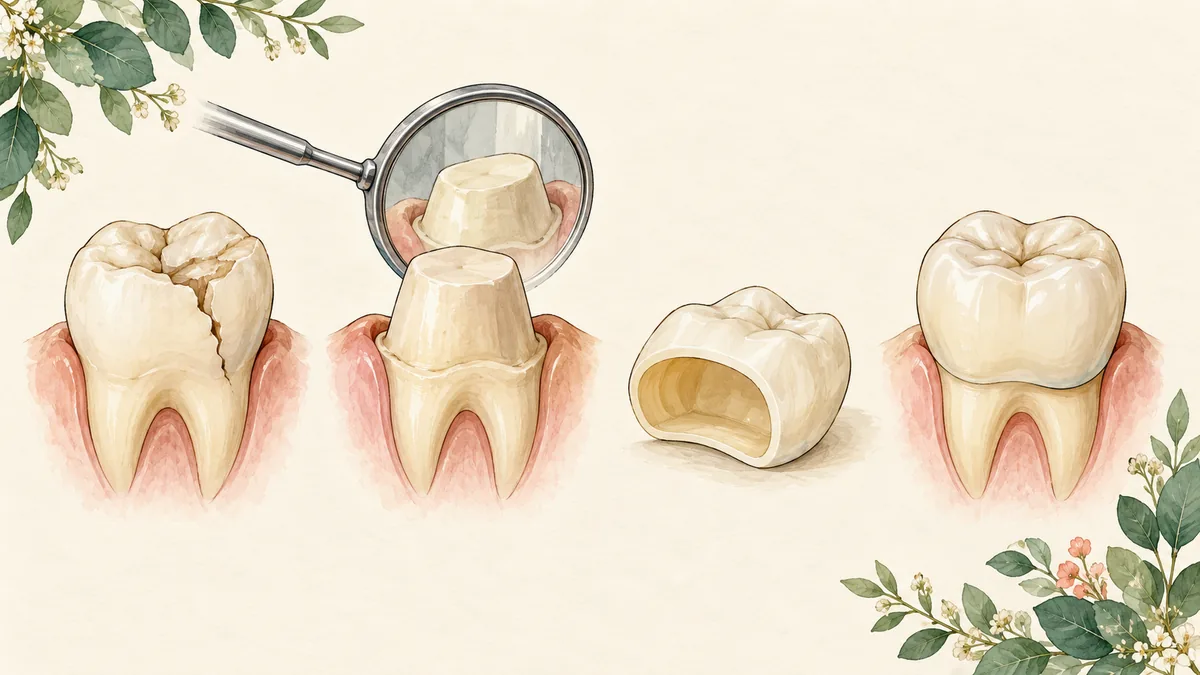
Putting dental work right can cost a lot because a repair has to do things the original did not. A new dentist needs to find out what was done, any infection has to be dealt with first, and the old restoration may need to be removed and a replacement planned and fitted.
We found no source that compares the cost of a repair with the cost of the original, so we cannot say that it always costs more. Your records and X-rays matter because the new dentist needs to see what was done. A temporary restoration may also be needed between stages. Each of those steps is a cost that was not in the original quote.
The best evidence on scale comes from dentists. In a British Dental Association survey, two-thirds of the dentists said repair costs were at least £500,1 and over half said they were more than £1,000. The BDA’s news report of the survey adds that one in five of those dentists said the cost exceeded £5,000,2 and that crowns and then implants were the treatments most often needing follow-up work.
Read those figures with care. They are what dentists reported about patients treated abroad in general, not about Turkey in particular. The pages do not say how many dentists answered each question, and they are not dated. They show that repairs can be large, not how likely it is that you will need one.
What can we say about the price in each scenario?
We have no verified price for a private repair, whether of a single crown, several crowns, an implant revision or root canal treatment, and we will not invent a range. What we can show is what the NHS charges in England for the same kind of care when it is clinically needed.
The NHS charges page places urgent treatment, including refixing a crown or inlay, in Band 1, root canal treatment and extractions in Band 2, and crowns in Band 3.3
| Scenario | NHS band | Charge | Verified private repair price |
|---|---|---|---|
| Crown comes loose and needs refixing | Urgent treatment, Band 1 | £27.90 | None found |
| Tooth now needs root canal treatment | Band 2 | £76.60 | None found |
| Tooth must be extracted | Band 2 | £76.60 | None found |
| A failed crown is replaced | Band 3 | £332.10 | None found |
Three cautions apply. The table describes NHS care for a clinical need, and it is not what a private repair would cost. Not every practice is taking on new NHS patients, and the charge applies only if the NHS treats you. And the NHS will not refund the original work: its treatment abroad checklist is explicit that you cannot get reimbursement for dental treatment abroad.6 In the BDA’s report, just over 40% of responding dentists said the remedial treatment was provided on the NHS, which shows it is one route, not a guaranteed one.2
Where the problem is an implant, there is no NHS charge to show, because implants are generally outside NHS dentistry, and the advertised private fees we report are for new implants, not revisions. Ask a UK practice for a written estimate once they have examined you (our page on private dental fees in the UK shows advertised fees and what a fee should include), and ask for it to be itemised in the way our quote checklist describes.
What is the cost nobody quotes: lost tooth structure?
Every restoration that needs preparation takes away part of the tooth. A review of tooth repair and regeneration research states that damaged enamel cannot be biologically regenerated.4 That means a replacement is made on what remains, and a redo can never give back what was removed the first time.
This is a cost measured in teeth rather than pounds, and no invoice carries it. It is the reason a second opinion before treatment is worth more than a repair afterwards, and the reason to ask a new dentist how much of the tooth is left before they plan anything. How long different restorations last is covered on how long “Turkey teeth” last.
Does a guarantee cover it, or do you pay again?
Whether a guarantee covers it depends on its terms and on whether you can use it from the UK; otherwise you may pay again. Ask before you pay for the original treatment what it covers, for how long, what you must do to keep it valid and what happens if you cannot travel back.
The NHS states that it is not liable for negligence or failure of treatment abroad, and that most travel insurance policies will not cover planned treatment.5 The cost of a failure can therefore land on you.
Our guide to guarantees and redress explains what to look for, and it gives general information, not legal advice. If you need to find a dentist who will look at the work, see finding a dentist at home. And for the full picture of the three price worlds that this problem sits within, return to what dental treatment costs.
Frequently asked questions
-
How much does it cost to fix Turkey teeth?
We found no verified price for repairing dental work. In a British Dental Association survey, two-thirds of dentists said repair costs were at least £500, over half said more than £1,000 and one in five of those dentists said the cost exceeded £5,000. Those are dentists’ estimates, not prices, and they do not single out Turkey.
-
Will the NHS fix problems from treatment abroad?
It can treat a clinical need, such as an infection, at the normal NHS charge, but the original treatment is not reimbursed and not every practice is taking on new NHS patients. Just over 40% of responding dentists in the BDA survey said remedial treatment was provided on the NHS. NHS care and emergencies explains the routes.
-
Can I get my money back from the clinic?
It depends on what the clinic’s guarantee says and whether you can make a claim from the UK. Keep the written terms, the invoices and your X-rays. The page on guarantees and redress explains what to check, and it is general information rather than legal advice.
-
Does travel insurance cover repairs?
Usually not. The NHS says that most travel insurance policies will not cover planned treatment abroad, so check the wording of your own policy and ask the insurer about complications before you travel. Do not assume a policy covers repairs: ask in writing, and keep the reply with your treatment paperwork in case you need it later.
-
Who should I see first if something goes wrong?
Your own dentist, or NHS 111 if you cannot reach one. Call 999 or go to A&E if it is hard to breathe, speak, swallow or open your mouth, if your mouth, face or neck is very swollen, or if an eye is swollen or painful or your sight suddenly changes. If you need to find a dentist who will see you, read about finding a dentist at home.